
If you have been looking into loft conversions in London, you will have come across the word dormer more times than you can count. And there is a good reason for that. Dormer loft conversions are by far the most popular type of loft conversion carried out across the capital, and they have been for decades. They suit the vast majority of London’s housing stock, they offer excellent value for money, and when done properly, they add a significant amount of usable space and real financial value to a property.
But what exactly is a dormer loft conversion? How does it work? What does it cost? And is it the right choice for your home? This guide covers everything you need to know, from the basics right through to planning permission, building regulations, timelines, and what to look for when choosing a contractor.
What Is a Dormer Loft Conversion?
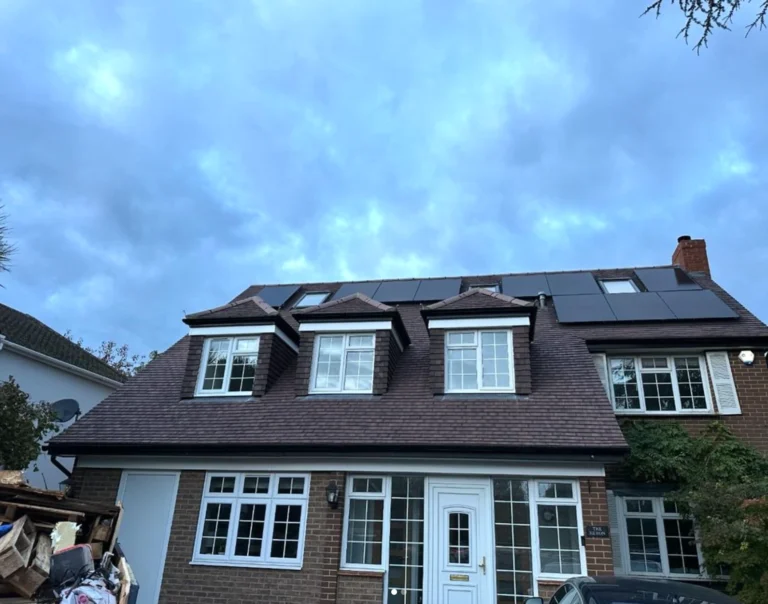
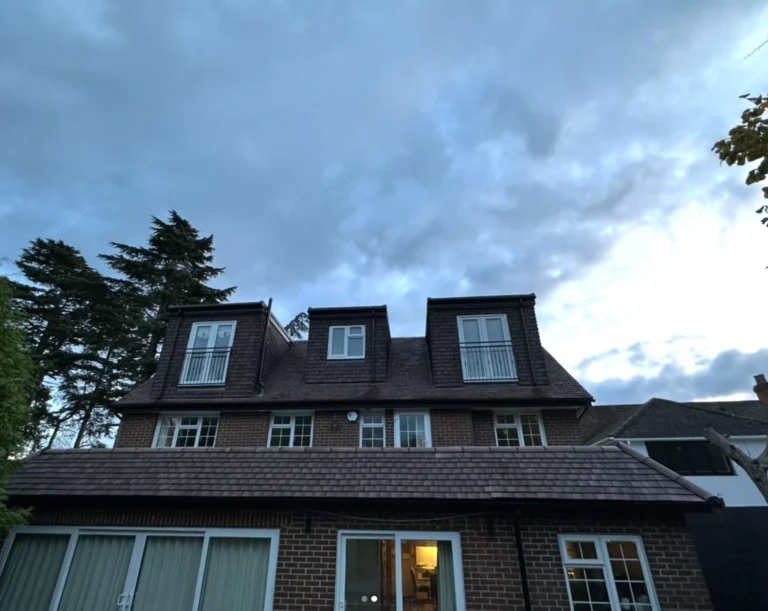
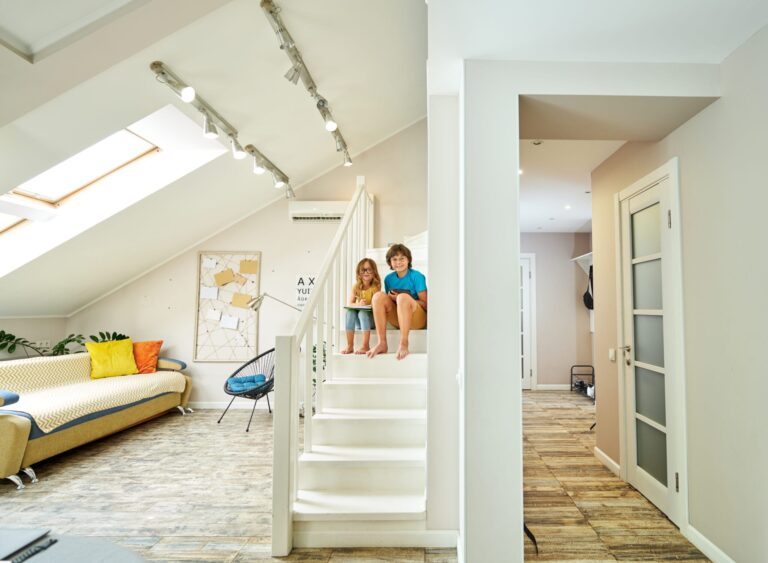
A dormer loft conversion involves adding a structural extension to the existing slope of your roof. The dormer projects outward vertically from the roofline, creating a box-shaped addition that sits on top of the existing roof structure. Inside the loft, this translates into significantly more headroom and floor space than the original sloping roof would allow.
The word dormer comes from the French word for bedroom, which tells you something about how long this type of roof extension has been in use. Dormers have been a feature of London’s roofscape for well over a century, and in many parts of the city they are so common that they are simply part of the architectural character of the street.
There are several variations of the dormer design. The most common in London is the flat-roof rear dormer, which runs the full width of the rear of the property and provides the maximum possible amount of internal space. Other variations include the shed dormer, the gable-fronted dormer, and the eyebrow dormer, though these are less common in residential conversions and more often seen on commercial or heritage buildings.
Why Are Dormer Loft Conversions So Popular in London?
London’s housing stock is dominated by Victorian and Edwardian terraced and semi-detached houses. These properties were built with pitched roofs that create a reasonable amount of loft space, but the sloping sides of the roof mean that much of that space is unusable without some form of structural alteration.
A rear dormer solves this problem neatly. By extending the rear slope of the roof outward and upward, it creates a room with full-height walls and a flat or low-pitched ceiling, which is far more practical than the cramped, awkward space that a standard pitched roof produces.
Beyond the practical benefits, dormer conversions are popular because they are relatively cost-effective compared to more complex options like mansard conversions. They are also faster to complete, less disruptive to the fabric of the existing building, and in most cases they can be carried out under permitted development rights, which means no planning application is required.
For homeowners in areas like Finchley, Crouch End, Walthamstow, Hackney, Lewisham, and Tooting, a rear dormer is often the obvious first choice when it comes to adding a bedroom or a home office without the cost and disruption of moving house.
Types of Dormer Loft Conversion
Rear Dormer
The rear dormer is the standard choice for most London terraces and semi-detached houses. It runs across the full width of the rear elevation of the property, maximising the internal floor area and headroom. Because it faces the back of the house rather than the street, it is generally considered to have less visual impact on the character of the area, which is why it so often falls under permitted development.
A full-width rear dormer on a typical London terrace can add a room measuring anywhere from 15 to 30 square metres depending on the size of the property, which is enough for a generously sized double bedroom with an en suite bathroom, or a large home office with storage.
Side Dormer
A side dormer is a smaller structure added to the side slope of the roof rather than the rear. These are less common in London because many terraced properties share party walls and have limited or no side elevation to work with. However, on detached and some semi-detached properties, a side dormer can be a useful addition, particularly when combined with a rear dormer to maximise the overall space.
L-Shaped Dormer
The L-shaped dormer is a variation that combines a rear dormer on the main roof with a second dormer over a rear outrigger or back addition. This configuration is particularly well suited to Victorian and Edwardian terraces that have a lower rear extension at ground or first floor level, which is an extremely common layout in areas like Highgate, Archway, Stroud Green, Stoke Newington, and Clapton.
The L-shaped configuration significantly increases the total floor area compared to a standard rear dormer, often creating enough space for two bedrooms and a bathroom where previously there was none. It is covered in more detail in a separate guide, but it is worth mentioning here because it is technically a type of dormer conversion.
Mansard with Dormer Elements
Some conversions blend dormer and mansard elements, particularly in inner London boroughs where planning authorities have specific design requirements. These are more complex and more expensive than a standard dormer, but they can produce exceptional results in the right property.
Planning Permission for Dormer Loft Conversions in London
One of the biggest advantages of a rear dormer conversion is that it very often falls under permitted development rights. This means that as long as your project meets certain criteria set out by the government’s General Permitted Development Order, you can carry out the work without submitting a formal planning application to your local council.
The key criteria for permitted development include:
• The dormer must not extend beyond the highest point of the existing roof
• The materials used must be similar in appearance to the existing house
• The dormer must not overhang the outer face of the wall of the house
• Side-facing windows must be obscure-glazed and non-opening below 1.7 metres from the floor
• The total volume added to the roof must not exceed 40 cubic metres for terraced houses or 50 cubic metres for detached and semi-detached houses
However, there are important exceptions. If your property is in a conservation area, a National Park, an Area of Outstanding Natural Beauty, or a World Heritage Site, permitted development rights for roof alterations are significantly restricted or removed entirely. Many parts of inner London fall into conservation areas, including large parts of Islington, Camden, Kensington and Chelsea, Hammersmith and Fulham, and Wandsworth.
If your property is a listed building, you will need listed building consent in addition to any planning permission, and the requirements are considerably more stringent.
Article 4 Directions are another consideration. These are directions made by local planning authorities that remove permitted development rights in specific areas, often to protect the character of a particular neighbourhood. Several London boroughs have Article 4 Directions in place that affect loft conversions, so it is always worth checking with your local authority before assuming you can proceed without permission.
Even if your project does fall under permitted development, it is good practice to apply for a Lawful Development Certificate from your local council. This is a formal document confirming that your development is lawful, and it can be invaluable when it comes to selling your property in the future.
Building Regulations for Dormer Loft Conversions
Regardless of whether planning permission is required, all loft conversions must comply with building regulations. Building regulations are separate from planning permission and cover the structural and safety aspects of the work. They are not optional.
For a dormer loft conversion, building regulations will cover:
Structural integrity
The existing roof structure will need to be assessed and in most cases strengthened to support the additional weight of the dormer and the new floor. Steel beams are commonly used to carry the loads involved.
Fire safety
This is one of the most important aspects of any loft conversion. The new room must be separated from the rest of the house by fire-resistant construction, and an escape route must be provided. In most cases this means upgrading the existing staircase enclosure with fire doors and ensuring that windows in the new room meet the requirements for emergency escape.
Insulation
The new space must meet current thermal performance standards. This typically means insulating the roof, walls, and floor of the new room to a high standard, which also has the benefit of making the space comfortable to use year-round.
Staircase
The new staircase must comply with regulations covering headroom, pitch, rise, and going. In many London terraces, finding space for a compliant staircase is one of the more challenging aspects of the design process, and it is worth discussing this early with your architect or contractor.
Ventilation
The new room must be adequately ventilated, both for general air quality and to prevent condensation.
A building regulations application must be submitted before work begins, and a building control officer will carry out inspections at key stages of the build. At the end of the project, you will receive a completion certificate, which is an important document to keep safe for future reference.
The Build Process: What to Expect
Initial survey and design. A specialist will visit your property to assess the existing loft space, roof structure, and access. From this, a set of drawings will be produced showing the proposed dormer design, the new floor layout, and the staircase position.
Building regulations application. The drawings are submitted to your local authority’s building control department, or to an approved inspector, for approval. This process typically takes two to four weeks.
Permitted development check or planning application. If your project falls under permitted development, you may choose to apply for a Lawful Development Certificate at this stage. If planning permission is required, a formal application will be submitted and the decision will typically take eight weeks.
Scaffolding and structural work. Once approvals are in place, scaffolding is erected and the structural work begins. The existing roof is opened up, the dormer structure is built, and the new roof covering is installed. This phase is typically completed within two to three weeks.
Weatherproofing. The dormer is made watertight before any internal work begins. This is a critical stage and a reputable contractor will not move on until the new structure is fully weatherproof.
Internal fit-out. The floor, walls, and ceiling are boarded and insulated. The staircase is installed. First fix electrical and plumbing work is carried out, followed by plastering, second fix, and decoration. This phase typically takes four to six weeks depending on the specification.
Building control sign-off. A final inspection is carried out by the building control officer, and the completion certificate is issued.
The total build time for a straightforward rear dormer on a London terrace is typically eight to twelve weeks from the start of work on site.
How Much Does a Dormer Loft Conversion Cost in London?
Costs vary depending on the size of the property, the specification of the fit-out, and the specific location within London. As a general guide:
• A basic rear dormer with a single bedroom and no en suite typically starts from around £45,000
• A rear dormer with a double bedroom and en suite bathroom typically falls in the range of £55,000 to £70,000
• An L-shaped dormer with two bedrooms and a bathroom typically starts from around £65,000 and can reach £90,000 or more depending on specification
These figures include all structural work, building regulations fees, insulation, plastering, basic electrical and plumbing work, and a standard staircase. They do not typically include high-end finishes, bespoke joinery, or premium bathroom fittings, which will add to the overall cost.
It is also worth factoring in the cost of any planning fees if a formal application is required, and the cost of a Lawful Development Certificate if you choose to obtain one.
One thing to be cautious of is unusually low quotes. A dormer loft conversion is a significant structural project, and cutting corners on the structural work, insulation, or fire safety measures can have serious consequences. Always ask for a detailed breakdown of what is included in any quote, and make sure your contractor holds appropriate insurance and offers an insurance-backed guarantee.
How Much Value Does a Dormer Loft Conversion Add?
This is one of the most common questions homeowners ask, and the answer is consistently positive. A well-executed dormer loft conversion in London typically adds between 15 and 25 per cent to the value of a property, depending on the location and the quality of the work.
To put that in concrete terms, on a property worth £600,000 in an area like Muswell Hill, Palmers Green, or Chingford, a loft conversion could add between £90,000 and £150,000 in value. Against a project cost of £50,000 to £70,000, the return on investment is substantial.
Beyond the financial return, there is also the practical benefit of avoiding the cost and disruption of moving house. In London, the stamp duty, estate agent fees, legal costs, and removal costs associated with upsizing to a larger property can easily amount to £30,000 to £50,000 or more, before you even factor in the difference in purchase price. A loft conversion often makes far more financial sense.
Choosing a Loft Conversion Company in London
The quality of your contractor will have a direct impact on the quality of the finished result, the smoothness of the build process, and the long-term performance of the conversion. Here is what to look for.
Experience and track record. Look for a company with a demonstrable history of completing dormer loft conversions in London. Ask to see examples of completed projects, and if possible speak to previous clients.
Insurance-backed guarantee. This is non-negotiable. An insurance-backed guarantee protects your investment in the event that the contractor ceases trading before or after the work is completed. Without it, you have very limited recourse if something goes wrong.
Deposit protection. Be wary of any contractor who asks for a large upfront deposit without offering any form of deposit protection. Reputable companies will have arrangements in place to protect your money.
Clear contract and specification. Before any work begins, you should have a written contract that sets out exactly what is included in the price, the payment schedule, the timeline, and the process for dealing with any changes or disputes.
Building regulations compliance. Your contractor should handle the building regulations application on your behalf and should be familiar with the requirements of your local authority’s building control department.
At Neo Lofts London, we bring all of these elements together as standard. Every conversion we carry out comes with an insurance-backed guarantee and deposit protection, and we handle the entire process from initial survey through to building control sign-off.
What is the difference between a dormer and a mansard loft conversion?
A dormer involves adding a box-shaped extension to the existing roof slope, while a mansard involves rebuilding the entire rear slope of the roof at a steep angle. Mansard conversions create more space but are more expensive and almost always require planning permission.
Can I add a bathroom to a dormer loft conversion?
Yes. Adding an en suite bathroom to a dormer loft conversion is very common and is one of the most popular configurations. The plumbing requirements are straightforward in most London terraces, and the additional cost is usually well worth it in terms of both usability and added value.
Do I need an architect for a dormer loft conversion?
You will need a set of drawings for the building regulations application, and these should be produced by someone with appropriate qualifications and experience. Some loft conversion companies employ in-house designers or work with architectural technicians, while others will recommend an independent architect.
How much headroom will I have in a dormer loft conversion?
The headroom in the main body of a dormer conversion is typically between 2.2 and 2.4 metres, depending on the existing roof height. This is more than enough for comfortable use as a bedroom or office.
Will I lose storage space when I convert my loft?
You will lose the existing loft storage space, but most dormer conversions include eaves storage areas on either side of the main room, which can be used for suitcases, seasonal items, and other storage needs.
Can a dormer loft conversion be done while I am living in the house?
Yes. The vast majority of dormer loft conversions in London are carried out while the homeowners continue to live in the property. The main disruption occurs during the structural phase when the roof is opened up, but this is typically completed within a week or two.
What happens if my neighbour objects to my loft conversion?
If your project falls under permitted development, your neighbour does not have the right to prevent it, though they may raise concerns about the party wall. If planning permission is required, your neighbour can submit objections to the planning authority, which will be considered as part of the decision-making process.
Do I need a party wall agreement for a dormer loft conversion?
If your property shares a party wall with a neighbour, which is the case for most London terraces and semi-detached houses, you will need to serve a party wall notice before work begins. If your neighbour agrees, the process is straightforward. If they dissent, a party wall surveyor will need to be appointed.
How do I know if my loft is suitable for a dormer conversion?
The key factors are the existing roof height, the roof structure, and the available floor area. A specialist survey will confirm whether your loft is suitable and what type of conversion would work best. At Neo Lofts London, we offer free surveys with no obligation.
Is a dormer loft conversion worth it in London?
In the vast majority of cases, yes. The combination of added space, added value, and the avoidance of moving costs makes a dormer loft conversion one of the most financially sound home improvements available to London homeowners.
Final Section
If you are considering a dormer loft conversion and would like to find out what is possible in your home, get in touch with Neo Lofts London today. We offer free, no-obligation surveys across all areas of London and the surrounding counties, and we will give you an honest assessment of your options with no pressure to commit.